PS5 vs PC: The Shared AMD Architecture and Key Technical Divergences
Explore the structural differences between PS5 and PC gaming hardware powered by AMD Zen 2 and custom RDNA architectures.

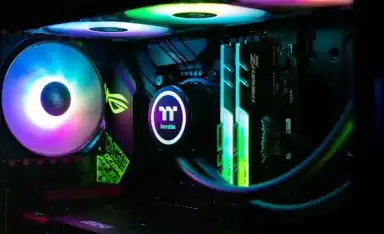
Shared Silicon: Zen 2 Processing and Custom RDNA Graphics
At the operational core of the PlayStation 5 sits a semi-custom system-on-chip developed by AMD, featuring eight cores and sixteen threads based on the Zen 2 microarchitecture. This silicon layout reflects desktop processors such as the AMD Ryzen 7 3700X, operating with targeted dynamic clock frequencies capping at 3.5 GHz to balance acoustic profiles and strict thermal limits inside the console housing. On the graphical workload spectrum, Sony Interactive Entertainment integrated a bespoke variant of the AMD RDNA 2 architecture housing 36 compute units that operate up to 2.23 GHz. Within the personal computer market, this hardware closely mirrors dedicated mid-tier GPUs like the AMD Radeon RX 6700, although the console design omits desktop-specific features such as the full AMD Infinity Cache in favor of a tightly routed, monolithic memory bus.
Unified Memory Architecture Against Desktop Modularity
The defining structural divide between console and desktop lies in memory subsystem topology. A standard gaming PC divides tasks across system DDR5 memory and dedicated graphics VRAM, communicating across the high-speed PCI Express 4.0 or 5.0 bus. In contrast, the console implements a unified pool of 16 GB GDDR6, allowing both processing units and graphics execution engines to share assets instantly without transferring copies across external buses. However, the personal computer ecosystem retains a dominant ceiling regarding peak computing throughput. Modern desktop hardware configurations powered by NVIDIA GeForce RTX or top-tier AMD Radeon graphics cards vastly outperform console silicon in ray-tracing math, utilizing hardware-accelerated upscalers like NVIDIA DLSS to target native 4K rendering well past 120 frames per second on high-refresh-rate displays. Even with desktop computers holding the raw theoretical crown, console development leverages a decisive engineering advantage: eliminating high-overhead software translation layers. Targeting a static hardware target allows developers to bypass multi-hardware driver overhead, exploiting the integrated custom NVMe storage controller and Kraken hardware decompression block to achieve instant asset streaming that PC games only gradually match through the DirectStorage API.
Key Takeaways
- •Both PlayStation 5 and modern gaming rigs rely on foundational AMD Zen 2 compute cores and RDNA graphics tech.
- •The unified 16GB GDDR6 memory subsystem in consoles delivers distinct bandwidth traits compared to split system RAM and VRAM.
- •As of October 2026, low-level fixed-hardware optimization continues to rival the raw modular horsepower of PC components.
Sources & References (2)
- PlayStation Blog↗
PlayStation 5: Tech Specs Detailed
Confirma oficialmente las especificaciones de hardware de PS5 con CPU AMD Zen 2 a 3,5 GHz y GPU RDNA 2 personalizada con 36 CUs a 2,23 GHz.
- PlayStation↗
The Road to PS5
Presentación técnica oficial de Mark Cerny sobre la arquitectura semipersonalizada de AMD y la gestión de frecuencias de la PS5.
More about PlayStation Network & Xbox Live
Explore all updates and fixes in our PlayStation Network & Xbox Live section.
Did you find this article interesting?
Your vote helps calibrate recommendations in the community.
Comments (0)
Recommended Reading

8000 Hz Gaming Mice: Worth the Edge or Excessive CPU Bottleneck in eSports?
Testing ultra-high polling rates: sub-millisecond click latency, CPU thread usage, and 360 Hz monitor pairing.

Wi-Fi 7 Gaming Routers and 320 MHz Channels: Sub-Millisecond Wireless Latency
Multi-Link Operation (MLO) allows concurrent 5 GHz and 6 GHz transmission, challenging traditional Ethernet cables.